Mullins Lab
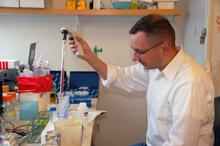
The Mullins laboratory is located in Building F on the South Lake Union campus of the University of Washington School of Medicine. Our lab uses molecular, computational, and virus biology techniques to provide insights into the relationship between HIV and its human hosts in an effort to fight the AIDS pandemic. We use a variety of methods to document and understand the implications of HIV's extraordinary genetic diversity on the immunopathogenesis of AIDS, with a particular emphasis on acute/early infection and superinfection. We then apply this information to develop more effective vaccines and therapies in collaboration with other investigators. Our research work focuses on the acquisition and computational characterization of HIV nucleotide sequences, the development of web tools for related computational studies, in vitro studies of the growth properties of viral isolates, host genetic polymorphism analysis, and high-throughput analysis of cellular transcription.
Lab News
Viroverse now available as open source software
Viroverse is a web application supporting
the collection, storage, retrieval, and analysis of our experimental data.
We’ve been developing it in our lab for over a decade. At long last, we have
made the source code available on
GitHub. If you give it a try or want
additional support setting up Viroverse in your lab, please let us
know.
Recent Publications
Sun C, Liu L, Pérez L, Li X, Liu Y, Xu P, Boritz EA, Mullins JI, Abate AR (2022). Droplet-microfluidics-assisted sequencing of HIV proviruses and their integration sites in cells from people on antiretroviral therapy. Nature biomedical engineering (ePub ahead of print). (pubmed) (doi)
More…
Christian ML, Dapp MJ, Scharffenberger SC, Jones H, Song C, Frenkel LM, Krumm A, Mullins JI, Rawlings DJ (2022). CRISPR/Cas9-Mediated Insertion of HIV Long Terminal Repeat within BACH2 Promotes Expansion of T Regulatory-like Cells. Journal of immunology (Baltimore, Md. : 1950), 208(7), 1700-1710. (pubmed) (doi)
More…
Long JE, Tordoff DM, Reisner SL, Dasgupta S, Mayer KH, Mullins JI, Lama JR, Herbeck JT, Duerr A (2022). HIV transmission patterns among transgender women, their cisgender male partners, and cisgender MSM in Lima, Peru: A molecular epidemiologic and phylodynamic analysis. Lancet Regional Health. Americas (ePub ahead of print). (pubmed) (doi)
More…
Rosati M, Agarwal M, Hu X, Devasundaram S, Stellas D, Chowdhury B, Bear J, Burns R, Donohue D, Pessaint L, Andersen H, Lewis MG, Terpos E, Dimopoulos MA, Wlodawer A, Mullins JI, Venzon DJ, Pavlakis GN, Felber BK (2021). Control of SARS-CoV-2 infection after Spike DNA or Spike DNA+Protein co-immunization in rhesus macaques. PLoS pathogens, 17(9), e1009701. (pubmed) (doi)
More…
O'Connor MA, Munson PV, Dross SE, Tunggal HC, Lewis TB, Osborn J, Peterson CW, Huang MW, Moats C, Smedley J, Jerome KR, Kiem HP, Bagley KC, Mullins JI, Fuller DH (2021). A Gut Reaction to SIV and SHIV Infection: Lower Dysregulation of Mucosal T Cells during Acute Infection Is Associated with Greater Viral Suppression during cART. Viruses (ePub ahead of print). (pubmed) (doi)
More…